
A finished basement can become one of the most useful areas of a home. It might serve as a family room, home theater, office, gym, guest space, game room, or a combination of several functions.
But before framing is covered and the finished surfaces go in, homeowners should think carefully about the electrical system behind those walls.
Planning electrical upgrades early can help create a basement that’s more functional today and better prepared for changing needs in the future. At Vons Electric, we recommend making these decisions as part of the overall remodeling plan rather than treating electrical work as an afterthought.
Here are seven upgrades to consider before finishing or remodeling your basement.
1. Add Enough Electrical Outlets
A finished basement can require significantly more electrical access than an unfinished storage or utility space.
Think about where TVs, computers, lamps, gaming systems, exercise equipment, chargers, appliances, and other devices may eventually be used.
Relying on extension cords because outlets weren’t incorporated into the original design isn’t an ideal long-term solution.
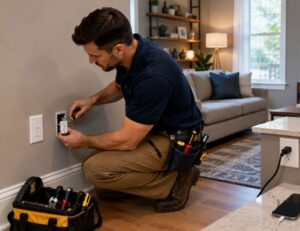
Homeowners wondering what’s involved can learn more about whether an electrician can add an outlet.
Outlet placement should be considered alongside furniture layouts and how people will actually move through and use the room.
2. Create a Better Basement Lighting Plan
Basements often have less natural light than the main levels of a home, making the electrical lighting design particularly important.
Instead of relying on a few basic ceiling fixtures, consider layering different types of lighting.
Recessed fixtures can provide broad illumination, while task lighting can serve desks, bars, hobby areas, or other work surfaces. Accent lighting can help define entertainment spaces and architectural features.
Vons Electric provides professional indoor and outdoor lighting services for homeowners planning lighting improvements.
LED technology can also be worth considering. Homeowners comparing lighting options can review our guide to LED versus fluorescent lighting.
3. Plan Dedicated Circuits for High-Demand Equipment
Not everything in a finished basement should necessarily share the same electrical circuits.
Depending on how the basement will be used, homeowners may want to accommodate equipment such as entertainment systems, exercise equipment, refrigerators, freezers, computers, or other electrical loads.
The important part is identifying these needs before construction is complete.
Professional electrical installation can help ensure new electrical components are incorporated appropriately into the remodeling project.
Think About Future Uses, Too
Your basement’s purpose may change over time.
Today’s children’s playroom might eventually become a home theater or office. An open recreational area could later include exercise equipment or additional electronics.
Planning some flexibility into the electrical design can make future changes easier.
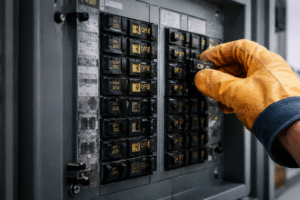
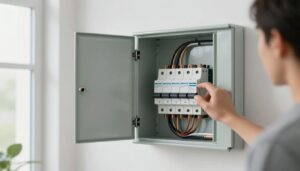
4. Evaluate the Electrical Panel
A basement remodel adds new electrical demands to the home.
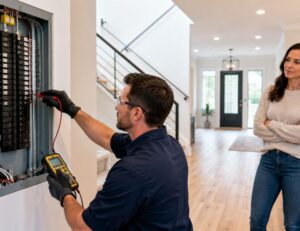
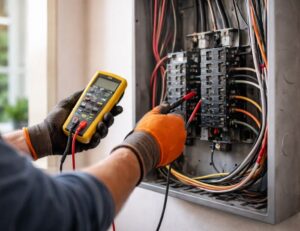
Before installing additional circuits, outlets, lighting, and equipment, it makes sense to consider whether the existing electrical panel is suitable for the planned work.
Homeowners can review the signs it may be time to upgrade an electrical panel to understand some common reasons panel improvements are considered.
Vons Electric also provides professional electrical panel upgrade services when an upgrade is appropriate.
If you’re researching the financial side of a larger upgrade, our guide to 200-amp electrical panel upgrade costs provides additional context.
5. Address Older Wiring Before Closing the Walls
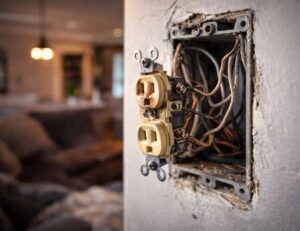
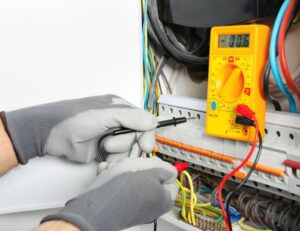
Remodeling provides an opportunity to evaluate wiring that may otherwise become difficult to access once drywall and other finished surfaces are installed.
This can be especially important in an older home.
If the existing wiring needs improvement, addressing it during construction may be more practical than discovering the problem after the newly finished basement is complete.
Vons Electric provides professional electrical wiring and rewiring for homeowners whose electrical systems require updates.
Our guide to common electrical problems in older homes also explains why aging electrical systems deserve attention.
6. Plan Electrical Needs Around Entertainment and Work Areas
Modern basements frequently perform more than one job.
A single basement might include a television area, home office, workout space, bar, gaming area, and guest room.
Each zone can have different electrical requirements.
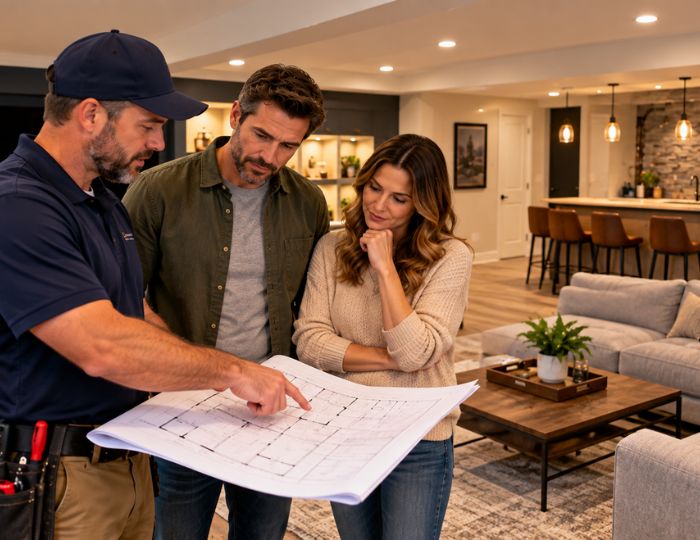
Before construction starts, map out where major electronics, furniture, desks, televisions, and other equipment will likely be positioned.
This allows the electrical design to support the room rather than forcing the room to adapt to limited electrical access later.
If a remodel is part of a larger home project, review our guide to preparing your home’s electrical system before a major renovation.
7. Leave Room for Future Electrical Upgrades
Finishing a basement is a significant project, so it makes sense to think beyond immediate needs.
Future technology, additional appliances, new entertainment equipment, or changes in how the family uses the basement could increase electrical demand.
Planning ahead doesn’t mean installing every imaginable feature today.
It means discussing likely future uses with an electrician while the space is still being designed.
A professional electrician can help identify where additional capacity or infrastructure may be useful.
Electrical Planning Should Happen Before the Basement Is Finished
Electrical decisions are much easier to incorporate when they’re part of the remodeling plan from the beginning.
Waiting until walls, ceilings, cabinetry, and finishes are complete can make changes more complicated.
That’s why homeowners should determine outlet locations, lighting layouts, equipment requirements, circuit needs, and potential panel or wiring improvements early in the project.
If you’re preparing to remodel or finish your basement, contact Vons Electric to discuss the electrical portion of your project.
Key Takeaways
Plan electrical work before basement walls and finished surfaces are completed.
Add outlets based on how furniture, electronics, and equipment will actually be used.
Create a layered lighting plan rather than relying on minimal overhead lighting.
Identify equipment that may require additional electrical planning or dedicated circuits.
Evaluate whether the existing electrical panel can support the remodeled space.
Consider older wiring while it’s accessible during construction.
Think about future uses so the basement’s electrical system can accommodate changing needs.